
Member, International Council, Fundación Faro
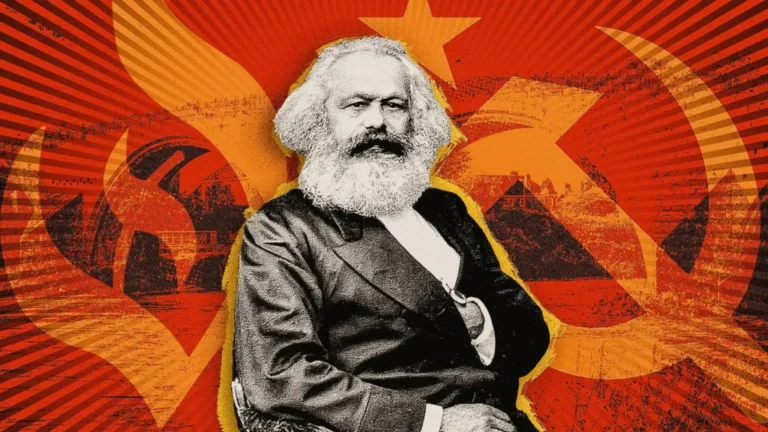
Classical Marxism did not withstand the passage of time. Transformed into the main current of socialism, it expanded from the second half of the 19th century onwards. It opposed capitalism, which it considered historically doomed, predicting the emergence of a new “mode of production”, a new system in which the working class would become the dominant class, ultimately ending the division of society into classes and, therefore, the class struggle, which Marx considered to be “the engine of history”.
It was renewed by Lenin in 1917, when he boldly seized power during the Russian Revolution and established a new regime, communism. The Soviet Union, created shortly thereafter, was the focus of the hopes of a couple of generations and increased its prestige by being part of the victorious side of the Second World War. Communism expanded, spanning China and Eastern Europe, and enjoyed its best moments at that time. The Soviet Union became a superpower that contested the first place in the world order.
But at the very moment of its peak, the Marxist left began to slide down the path of its failure. Both ideologically and politically or economically, the Soviet Union and the ideas it embodied were losing their appeal. The social changes that occurred since Marx’s time and the actions of the communist states themselves were the essential causes of that decline.
Society during the second half of the last century had very few similarities with that of Marx’s time, whose predictions, by the way, had turned out to be completely wrong. It was no longer composed, in essence, of two antagonistic classes – bourgeois and proletarians – that acted as homogeneous units, but of a multiplicity of diverse sectors and strata, which were by no means committed to the class struggle. The workers, nowhere, behaved like revolutionaries, and the standard of living had risen significantly in the hundred years that had passed. Marxism, as a doctrine or supposed scientific socialism, had nothing to say to the new generations.
If on the theoretical plane the Marxists had remained in the most complete isolation, in the practical sphere their failure was even greater. The USSR had had to intervene in Hungary and Czechoslovakia to prevent them from abandoning communism; it had distanced itself from China, which had broken with its dogmas as early as 1978, and was acting, almost without disguise, as a veritable imperial power. Its economy was faltering amid perpetual shortages of consumer goods and its technological backwardness was already beginning to become evident. Worse still, its performance with regard to the so-called social equality was even worse, for the Soviet society had become one of the most rigidly stratified.
All these factors were coming together so that the leaders of the Soviet Union understood that they needed to carry out profound reforms. But these, like a dam that breaks, ended up being uncontrollable and brought to light all the discontent that had been repressed for seven decades. Communism imploded, collapsing amidst national and social conflicts. It would have been easy to predict this a few years earlier, but nevertheless it took everyone by surprise: it was a real shock, which became visible in the unforgettable image of the Germans destroying the infamous Berlin Wall.
After the fall of the wall and the Chinese economic reforms, the dissolution of the Soviet Union and the abandonment of communism in all of Eastern Europe, the radical left was left without any reference points. As someone said—a priest who served as chaplain to the Marxist guerrilla movement in Guatemala—it was an ominous “black cloud” that shattered their hopes of turning communism into the new world order.
For all those who still wanted to continue fighting the hated capitalism, it was a time of discouragement, of watching in stunned amazement as their projects faded away. It is true that the changes were part of a process that, as such, had already begun with the discrediting of the USSR in previous years and with the loss of the sense of a classical Marxism overtaken by history. But the shock made it imperative for that left now to find alternatives to terms as worn out as the dictatorship of the proletariat and the construction of socialism. And they did.
Soon he found new subjects and new reasons to create fronts of struggle in an ideological battle that they were never willing to give up. If the class struggle and socialist revolution were no longer the banners to be raised, however, there was a wide field in which they could concentrate their efforts: that of society itself and its base—the family—the environment, health, and the long list of “rights” created during the 20th century. And this could be done not only within the framework of each national state, which was always somewhat narrow, but through supranational organizations, such as those created after 1945, or NGOs that transcended the borders of each country.
We will see then what measures the new left is trying to modify our values and our way of living. But first it is necessary to note that not all the left suffered the dramatic blow of the disappearance of communism. The more moderate ones, those who accepted the capitalist system in order to transform it, the Social Democrats, came out practically immune from the debacle. On the contrary, the parties of that tendency were favored by the decline of their communist cousins, as they showed many that it was possible to remain left-wing in a world without the soviets. The main reason for this has to be found in the policies derived from the core of the philosophy of the Social Democrats, of parties affiliated to them and of the center-right parties, especially in Europe: the welfare state or the benefactor state.
The radicalism of the new left
This profound change that the objectives and program of the left have undergone, making it unrecognizable from what it was half a century ago, is characterized by promoting an expansion of the role of the state at the expense of clear autonomy and true individual rights. We cannot here detail each of its proposals and actions, as several books would be needed to expound them, but we can give a brief summary of the main ones.
The left - which calls itself Progressive, To show a better image- he found several niches in which he could exert his influence, as well as strategies capable of making him regain positions. The issues and methods that became part of his agenda are real problems, but they are assumed in a radical and conflictual way, always seeking to make the state’s action prevail over the changes produced by the spontaneous order of society.
A common factor in left-wing policies is that all proposed solutions are carried out by the state, an essentially coercive institution that ultimately resorts to violence. Leftist proposals promote the expansion of its functions, increasingly encroaching on the private spheres of the individual in matters of health, family, religion, and the economy. They are decidedly collectivist, intolerant, and in many cases aggressive, and are based on a way of conceiving society that relies on division and opposition between various segments of the population. Each person is assigned to a group or sector, and the goal is to maximize their benefits and privileges at the expense, explicitly or not, of the groups that are supposed to be opposed. This is how many feminists, people with non-conforming sexual identities, and ethnic or linguistic groups act. For all this, they resemble the communists and revolutionaries of the last century, although given the differences in discourse, it is more appropriate to call them by another name, although there is no consensus on this: some prefer to speak of a cultural left, of cultural Marxism, or of a new left; others define them as globalists or they accept their self-appointed progressive name; they could also be called that
Neocommunists. In any case, the important thing is to distinguish them clearly from the liberals, even if that is how they are called in the United States and in much of Europe.
Feminism, which once made sense in the face of an order that relegated women to the margins, has translated into a series of laws that impose quotas that ultimately devalue them. Its most extreme expressions consist of opposition to men, such as those proclaimed by the so-called feminist groups. The hateful persecution of homosexuals, which was common in past eras, has become an imposition of values that exalt them and has reached such extremes as creating an infinity of supposed genders, even promoting sex changes in children that lead to the horrific practice of mutilations and harmful chemical treatments. The concern for environmental care has led to absurd prohibitions that violate private property and affect the economy, imposing high costs on the consumer. Racism has been combated by imposing quotas that, in essence, are nothing more than a new form of racism, opposed to the previous one. Health has been used as an excuse to impose or ban certain medicines and treatments, placing medical science at the service of questionable ideologies and, it is worth remembering, immense economic interests. The position of the globalists and the WHO during the COVID 19 pandemic, with their inhumane prohibitions, is a clear example of the extremes that can be reached in this regard.
We could continue to list and detail the positions of a left that seems to know no limits, not even those of science or reason. But the important thing is to underline that a reaction is being spread today against their absurd policies, which not only threaten specific groups in certain nations, but brutally attack the core values of our civilization. Rejecting and fighting ideologically and politically is imperative for all of us who can call ourselves classical liberals, libertarians, or anarcho-capitalists.
Carlos Sabino
Guatemala, 2025